Telecom Asset Management (TAM) Modules
Auto Discovery Module
The Auto Discovery Module enables intelligent and automated detection of active network devices by capturing system dumps and integrating with device APIs through scheduled processes.
It continuously generates periodic snapshots of the network, allowing accurate tracking of changes such as newly added, removed, or relocated devices.
By automatically matching discovered assets with purchase orders, the system produces real-time discrepancy reports, ensuring full visibility and control over network assets.
This approach protects network investments, reduces manual maintenance effort, and enhances overall service quality and operational efficiency.


Fiber Optics Module
The Fiber Optics Network Asset Management module provides a unified platform for managing multi-vendor, multi-technology fiber networks with complete visibility of fiber cables, ducts, strands, equipment, and site inventory. It automatically discovers end-to-end fiber connectivity, linking network assets, sites, customers, and services.
The system delivers complete fiber path traceability, precise fiber break localization, identifies the affected customers, sites, and services during network failures, and locates the nearest available resources for new connections. Duct Utilization, Strand Utilization, and Node Port Utilization analytics provide accurate visibility of network capacity and availability, enabling better resource utilization, optimized expansion planning, and improved return on investment (ROI).
Integrated CRM, trouble ticketing, work order management, and ESRI GIS provide accurate geospatial visualization, streamlined operations, and data-driven decision-making to improve network performance and maximize the value of fiber infrastructure.
Reports & Dashboard Module
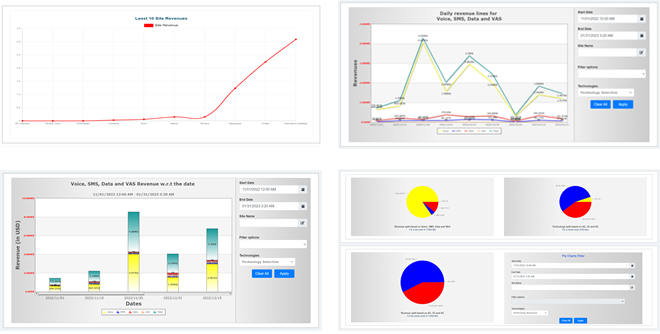
The Reports and Dashboard Module enhances data visualization by integrating a variety of charts that make complex information easier to understand and analyze. Using multiple chart types improves data accessibility, strengthens communication, and supports data-driven decision-making by presenting insights from different perspectives.
Interactive dashboards and detailed reports allow users to quickly interpret key metrics, identify trends, and gain actionable insights. By combining different visualization techniques, organizations can ensure clarity, improve reporting efficiency, and deliver meaningful analytics to a wide range of stakeholders.
- Bar Charts: Ideal for comparing values across categories and highlighting differences in data.
- Line Charts: Useful for visualizing trends and changes over time.
- Pie Charts: Effective for displaying proportions and percentage distributions.
Leveraging diverse chart types within dashboards and reports ensures faster understanding, clearer insights, and more effective business decisions.

Network Planning, Finance and Inventory Module
Telecom Asset Management (TAM) plays a key role in network planning, finance, and inventory by providing an accurate and centralized network asset database. It delivers detailed visibility of site assets, including models and part numbers, along with complete transaction history and performance analytics for sites, nodes, and network paths, forming a reliable foundation for deploying new sites and expanding network paths.
By combining asset data, transactions, and performance metrics—such as utilization, revenue-to-asset, population-to-asset, and expense-to-asset ratios, both current and historical, TAM enables data-driven network design, realignment, and optimization. This ensures precise financial planning, controlled budgeting, and efficient network inventory management while protecting the overall value of network assets.
In addition, TAM tracks the delivery and deployment of purchase orders through integrated auto discovery, automatically generating discrepancy reports to support supplier payments and further safeguard network assets.
Purchasing Module
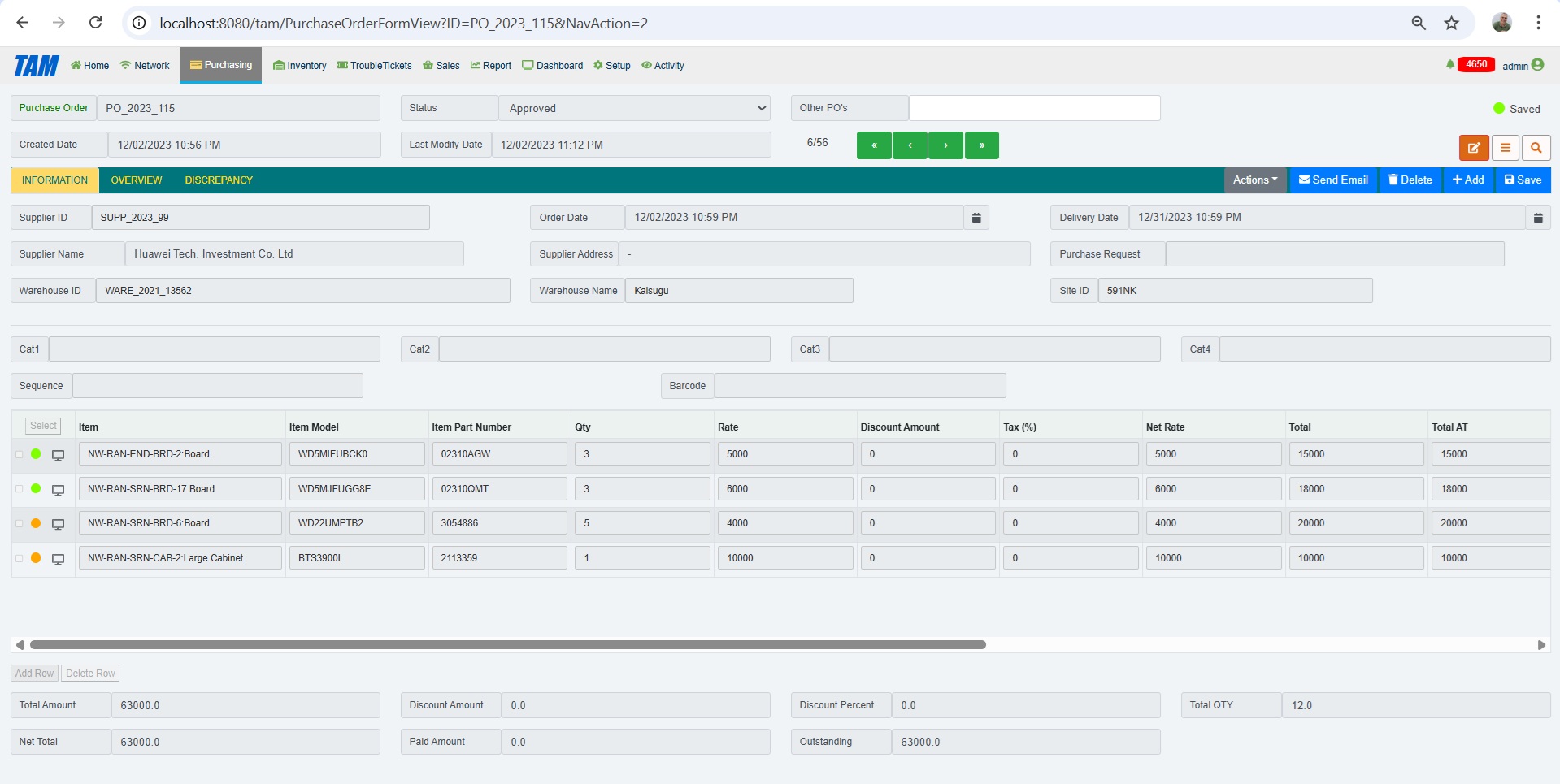
The Purchasing Module in Telecom Asset Management (TAM) ensures that all purchase orders are aligned with approved budgets by leveraging accurate asset values and real-time network performance insights. It provides full visibility of required assets, enabling controlled and informed procurement decisions.
TAM also maintains a structured item coding system, where each asset is assigned a unique item code linked to its hierarchical category classification, supporting consistent inventory control and enabling intelligent reporting and analytics.
In addition, through integration with the auto discovery module, TAM tracks asset registration against purchase orders and automatically generates discrepancy reports, ensuring verification of delivered items and supporting accurate supplier payment arrangements.
Asset Life Cycle Module
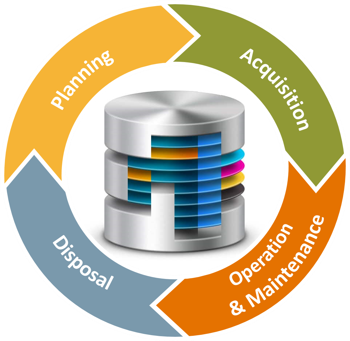
The TAM Asset Life Cycle Module provides a comprehensive platform for managing the complete life cycle of telecom and enterprise assets, starting from planning and procurement up to retirement and disposal. The module maintains a centralized Asset Register and Fixed Asset Register that are automatically populated through intelligent auto discovery processes and workflow-driven operations, ensuring accurate and real-time asset tracking across the network infrastructure.
Newly discovered assets can be automatically matched with their corresponding purchase order records to identify the initial acquisition cost, enabling TAM to accurately calculate asset depreciation, book value, and net cost throughout the operational life cycle. This integration between procurement, finance, and technical operations improves financial accuracy, simplifies auditing processes, and supports better investment and budgeting decisions. The module is supporting the integration with ERP systems.
TAM monitors all asset life cycle phases of each asset, including planning, ordering, installation, transfer, decommissioning, and disposal, and captures them through network transaction reports supported by GIS, ensuring complete asset traceability and operational visibility.